
I've been working in SEO since 2021, and for most of that time, a "content tool" meant one thing: helping me write faster. Scalenut used to fit that description pretty well.
But the platform looks very different now.
In early 2026, Scalenut shifted toward GEO and AI search visibility, positioning itself as more than just a writing assistant.
The focus now is on execution - from AI visibility tracking and optimization insights to actually helping you improve performance across search and AI platforms.
So I tested it from a real workflow perspective: research, optimization, article creation, topical planning, and AI visibility tracking.
And, in this review, I break down what Scalenut genuinely does well, where it still needs work, and how the pricing stacks up so you can decide whether it’s worth investing in.
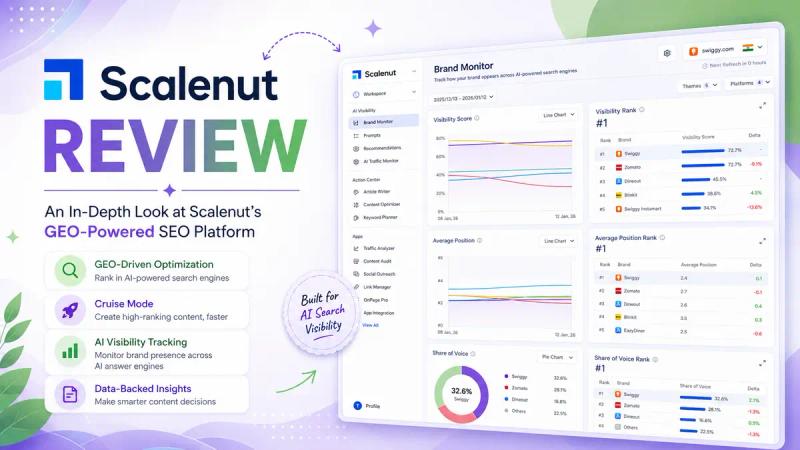
- Scalenut now tracks how your brand appears across ChatGPT, Google AI Overviews, and Perplexity, and combines that with content creation, optimization, auditing, and Reddit-based social listening.
- The Starter plan runs $59/month (monthly) and tracks 10 prompts (Weekly Refresh) across ChatGPT & Google AIO only. The Plus plan at $89/month expands to 25 prompts and 2 domains, while the Professional plan at $199/month covers 100 prompts, adds Perplexity, and unlocks unlimited workspaces - a meaningful jump for agencies. A 7-day free trial is available across all tiers.
- Its strongest feature is the GEO Watchtower's Source Domains view - seeing exactly which third-party sites AI engines cite in your niche is genuinely useful competitive intelligence.
- Its most honest limitation is content output quality: Cruise Mode produces well-structured but derivative drafts that need real rewriting before they reflect your brand's voice.
- So, for teams already working on AI search visibility strategy and looking for a single dashboard to track, create, and optimize, Scalenut is one of the more affordable starting points available right now.
- But teams that need a deeper content intelligence layer on top of raw visibility data - specifically, understanding why content gets cited in AI answers and how to engineer that - will find platforms like RankSaver fill what Scalenut leaves open.
Scalenut Review: Feature by Feature Analysis
Scalenut's current platform is built around 5 interconnected capabilities.
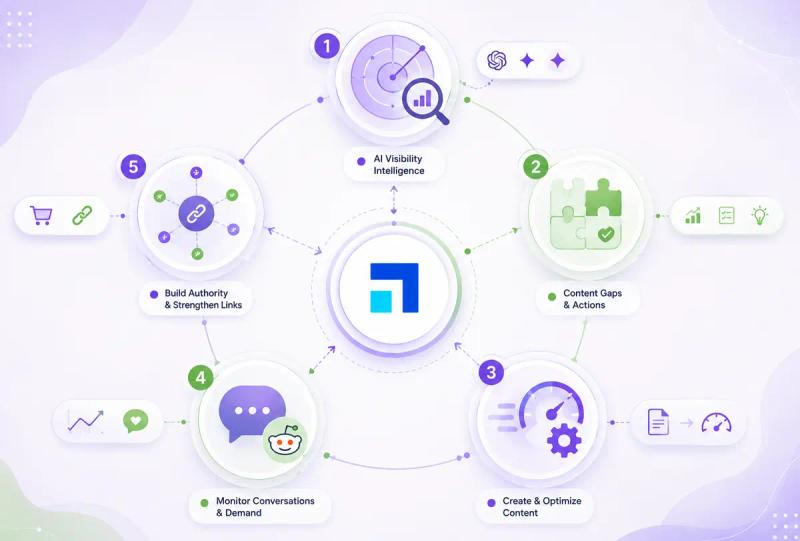
- GEO Watchtower handles AI visibility intelligence - tracking whether your brand appears in AI-generated responses and which domains those engines cite in your space.
- GEO Action Center sits on top of that data and surfaces content gaps, priority fixes, and the visibility drivers behind competitor citations.
- Content engine covers article creation via Cruise Mode and existing page optimization via the Content Optimizer, both scored against an 11-parameter GEO Score.
- Social UpReach monitors Reddit conversations for brand mentions and demand signals.
- Backlinks Marketplace and Internal Linking tool round out the authority-building layer.
The promise is one unified system for everything from prompt discovery to content execution to brand visibility tracking - no tool stacking required.
So now let's look at whether the platform actually delivers on that promise, where it still falls short, and what marketers need to consider before investing.
1. GEO Watchtower - Tracking Where Your Brand Shows Up in AI Search
Before I get into what GEO Watchtower does, here's the context that makes it relevant. When someone asks ChatGPT or Perplexity, it generates an answer, and that answer cites sources - specific domains it has learned to treat as authoritative on that topic.
So, if your brand isn't in that answer, you don't exist for that query, regardless of where you rank on Google. GEO Watchtower is Scalenut's answer to the question: where do we stand in that world?
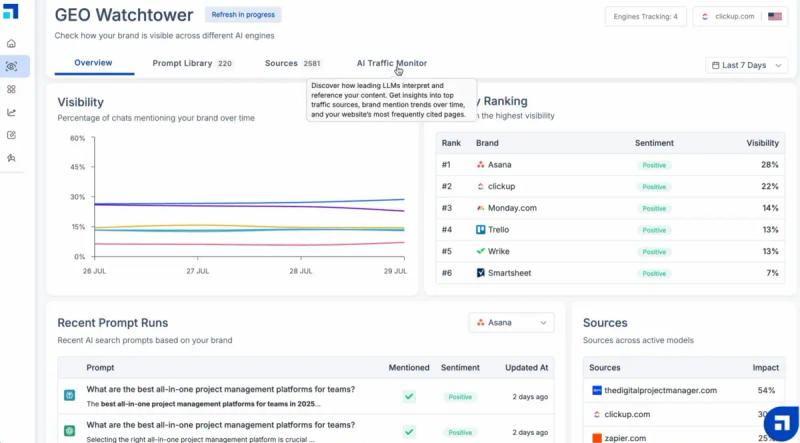
The mechanism is straightforward. You define a set of prompts - questions your target audience is realistically asking AI engines in your niche - and Watchtower runs those prompts across the AI engines your plan covers.
Starter and Plus plans track across ChatGPT and Google AI Overviews. The Professional plan at $199/month adds Perplexity. Results come back weekly by default, showing whether your brand was mentioned, which competitors were cited instead, and crucially, which source domains the engines pulled from when constructing their answers.
AI Traffic Monitor:
The feature adds another layer by separating bot visits from actual human clicks arriving from AI engine referrals - giving you a cleaner picture of how much traffic AI citations are actually driving versus what your analytics might show as direct or unattributed.
This does require a Cloudflare integration to work, which is a one-time setup but adds friction for teams not already on Cloudflare infrastructure. Worth doing, but don't underestimate the setup time if it's new to your stack.
Source Domains:
It is where I found the most actionable intelligence. It's one thing to know you weren't cited; it's another to see that three specific publications keep appearing in AI answers for your target prompts.
That tells you exactly where to focus content placement, digital PR, or link building efforts. Most visibility tools tell you what's happening. This tells you where the leverage is.
Limitations:
First, Microsoft Copilot isn't tracked on any current plan - a gap that matters more than it might seem, particularly for B2B brands whose buyers are embedded in Microsoft 365 environments.
Second, the prompt limit structure means you're working with 10 prompts on Starter, 25 on Plus, and 100 on Professional. For a focused single-domain strategy, 25 is workable.
But, for an agency tracking multiple clients across diverse topic sets, 100 can feel tight surprisingly quickly.
My Review on GEO Watchtower:
It does well to measure real AI visibility instead of relying on estimated data or modeled predictions. The insights come from actual prompt runs, which makes the tracking far more reliable.
But the drawback is that visibility data alone doesn’t always explain what actions to take next, so I often needed additional tools to connect Google or Bing rankings with content improvements that could actually drive results.
2. GEO Action Center - Does It Actually Help You Act on the Data?
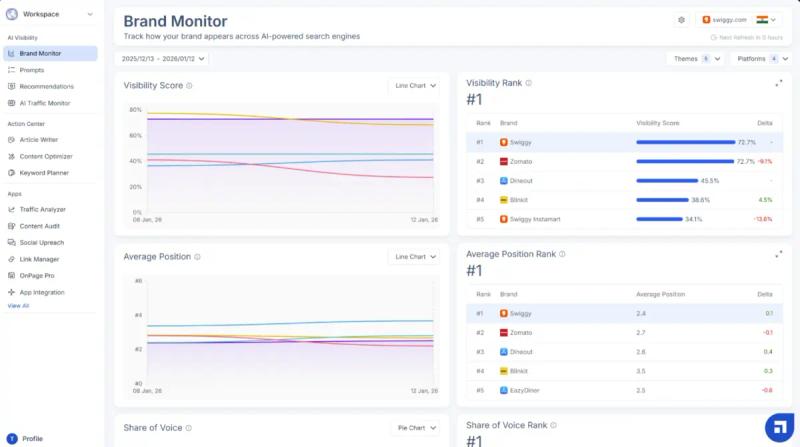
Visibility data is only worth the decisions it drives. The Action Center is Scalenut's attempt to bridge that gap - taking what Watchtower surfaces and translating it into a content plan you can actually execute.
In practice, it surfaces 3 things: topics your competitors are getting cited for that your content doesn't cover, the specific pages earning those competitor citations, and priority recommendations ranked by estimated visibility impact.
Here you can check which competitor's pages AI engines are citing, and reverse-engineer what topics and formats are earning that trust. For content gap analysis that would otherwise involve manually cross-referencing multiple tools, this is a genuine time saver.
For an experienced SEO that workflow is fine - the data is surfaced faster than doing it manually, and the interpretation layer sits naturally with someone who already knows what to do with a content gap.
But for a content manager expecting the tool to hand them a ready-to-execute roadmap, that expectation will meet friction. The Action Center is a strong research accelerator, not a strategy replacement.
The Action Center identifies the problem and points toward a content direction, but it doesn't generate a brief, assign a priority score tied to business impact, or tell you how to structure the content so it gets cited rather than just indexed. You get a list of what's missing. Building the plan from that list is still your job.
3. Content Creation - What Cruise Mode Actually Produces
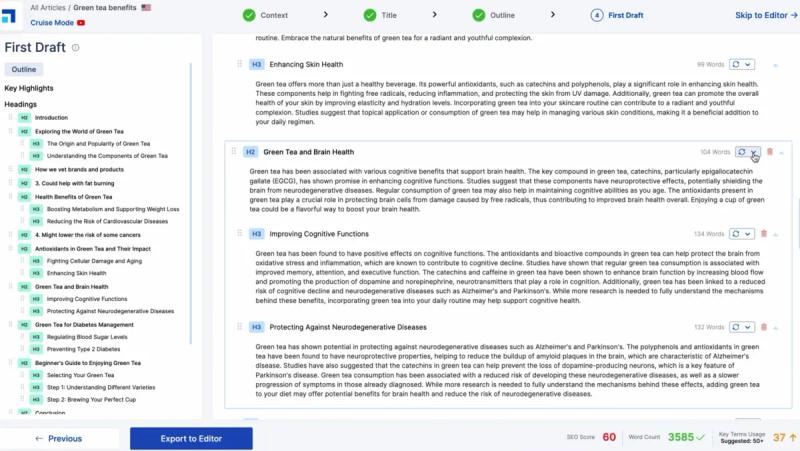
Cruise Mode works by analysing the top-ranking pages for your target keyword, building a structured outline from what's already performing, and writing section by section from that competitive foundation.
The output is clean, properly headed, NLP-term-complete, and structured exactly the way Google expects a comprehensive article to look.
That's also the limitation. Because it learns from what's ranking, it reproduces the shape of existing content rather than challenging it.
The draft you get is a competent synthesis of your top 10 competitors - useful as a scaffold, not as a finished product.
So, if your content strategy depends on original perspective, proprietary data, or a distinctive voice, budget significant rewriting time. 30-60% is realistic, not pessimistic.
The live editor is genuinely helpful here - NLP suggestions, word count guidance, and a real-time GEO Score that updates as you write give writers clear guardrails without being prescriptive.
The AI Fix button patches flagged gaps adequately. The Detect and Humanize feature reduces AI detection scores but doesn't substitute for actual editing.
So for teams producing high-volume SEO content where topical coverage matters more than voice, Cruise Mode earns its place. But for thought leadership content, it's a starting point, nothing more.
Content Optimizer and GEO Score - The Strongest Feature for Existing Pages
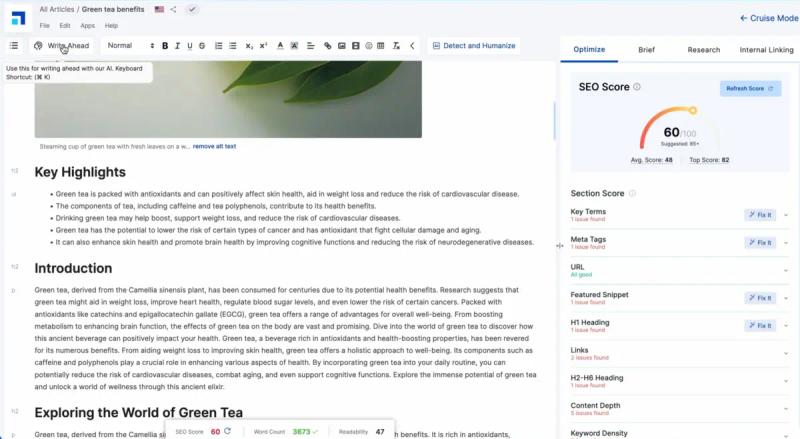
If Cruise Mode is Scalenut's most discussed feature, the Content Optimizer is its most underrated one. Paste a live URL or draft, and the platform runs a full competitor analysis, assigning a GEO Score across eleven parameters - NLP term coverage, heading structure, internal linking, schema readiness, featured snippet optimisation, and prompt coverage among them.
The reason I rate this above Cruise Mode is practical: refreshing pages that already have impressions but weak rankings or zero AI citations is one of the highest-return tasks in any SEO workflow, and this tool makes that process faster and more structured than doing it manually.
The Topic Gap Map shows exactly which subtopics competitors cover that your page doesn't, and the audit function surfaces which URLs across your site need attention first - useful for prioritising a content refresh queue without building a separate spreadsheet to track it.
4. Social UpReach - Reddit as a Demand Signal
Reddit is the no. 1 cited domain on Perplexity (4% share), no. 2 on SearchGPT (13% share), and no. 3 on Google AI Mode (9% share) across nearly every niche (Semrush). That makes community conversations a legitimate content intelligence source, not just a brand monitoring exercise - and Social UpReach reflects that logic.
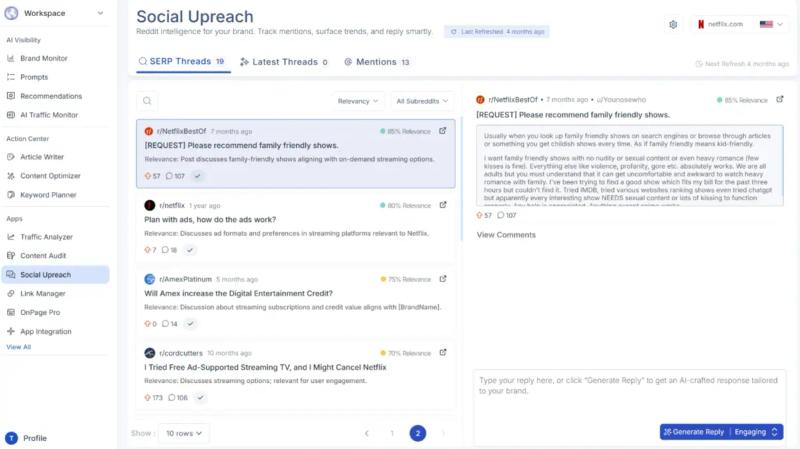
The feature monitors Reddit threads mentioning your brand or target keywords, labels each conversation by sentiment, and surfaces recurring questions and pain points from real users.
Available on Plus and above, it tracks up to 20 keywords, 5 subreddits, and 3 competitors on Plus, scaling to 40 keywords, 10 subreddits, and 6 competitors on Professional.
In practice, I used it less for sentiment tracking and more for FAQ and topic mining - identifying the exact questions communities keep returning to, which fed directly into content gap planning.
The limitation is scope: Reddit only, no LinkedIn or broader forum coverage, and no trend visualisation beyond a raw labelled feed. Useful for what it is; just don't expect a full social listening stack.
5. Backlinks Marketplace - Authority Building Without the Cold Outreach
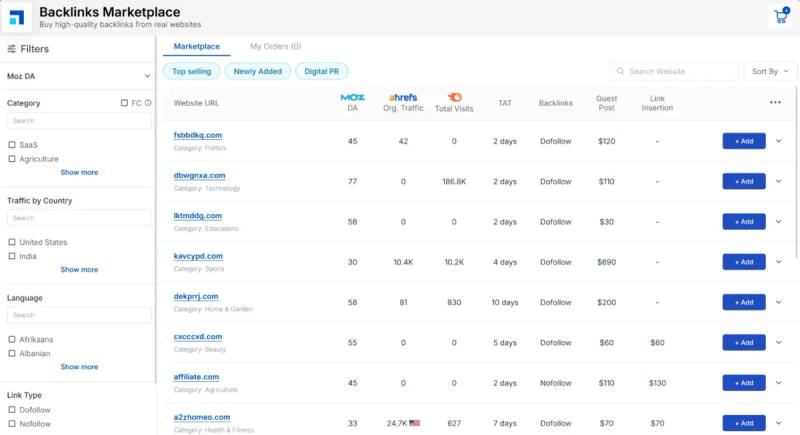
The Backlinks Marketplace cuts that loop entirely. You browse a curated inventory of verified publishers, filter by domain authority, domain rating, Ahrefs organic traffic, Semrush total visits, spam score, trust flow, turnaround time, niche, region, and language, then place an order directly.
Guest posts or link insertions - you choose, share your anchor text and target URL, and the publisher handles delivery.
Best Part: You can surface sites that AI engines already cite in your niche and target placements there specifically, which is a smarter way to build authority for AI search than blanket DA-chasing.
The pricing is pay-as-you-use - no fixed monthly fee on top of your plan, you pay per link acquired - which keeps it accessible for teams that need occasional placements rather than a sustained high-volume programme.
Limitation: For a serious link building operation running hundreds of outreach sequences monthly, a dedicated tool like Pitchbox or a managed PR workflow will give more control and scale.
But for an SMB or small agency that wants quality placements without building a separate outreach stack, having this inside the same dashboard where you're tracking visibility and optimising content removes meaningful friction.
Scalenut Pricing - What You Actually Pay in 2026
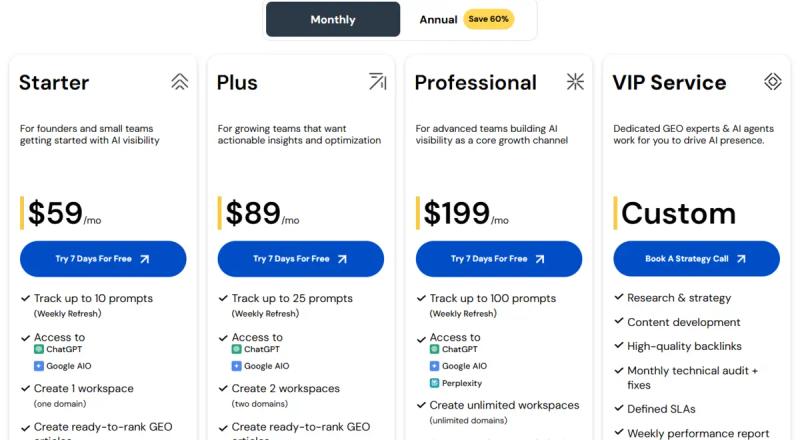
Scalenut runs 3 main content platform tiers on monthly billing: Starter at $59/month, Plus at $89/month, and Professional at $199/month. A 7-day free trial is available across all three.
The Starter plan covers one workspace (one domain), tracks 10 prompts weekly across ChatGPT and Google AI Overviews, and includes 5 GEO articles and 5 content optimisations per month - enough for a solo founder or small team testing the platform, not much more.
The Plus plan at $89/month is where the platform starts earning serious consideration: two domains, 25 prompts, 30 articles and optimisations per month, up to 4 team members, and it unlocks Social UpReach, the Backlinks Marketplace, internal linking, and content audit for up to 200 webpages monthly.
The Professional plan at $199/month adds Perplexity tracking, unlimited workspaces, 100 prompts, 75 articles and optimisations, 1,000 webpage audits monthly, cannibalization analysis, and a dedicated customer success manager.
Annual billing brings those figures down significantly - currently advertised at 60% off, bringing Starter to around $24/month, Plus to $36/month, and Professional to $80/month. Those are the numbers worth planning against if you're committing to a 12-month content workflow.
One thing the pricing page obscures: the Backlinks Marketplace operates on a separate pay-as-you-use basis, so your plan subscription doesn't include link costs.
Budget for those separately based on the placements you actually need. The VIP Service tier - where Scalenut's own team of strategists, writers, and AI agents handles GEO execution for you - is custom-quoted and requires a strategy call.
For context on where Scalenut sits in the market: at $80/month annually for the Professional plan, it undercuts most comparable all-in-one GEO platforms meaningfully.
That pricing advantage is real for SMBs and small agencies.
Limitations: It stops making sense on cost is at enterprise scale, where prompt limits run out quickly and the absence of Microsoft Copilot tracking creates coverage gaps that may require supplemental tools.
Who Should Use Scalenut - And Who Shouldn't
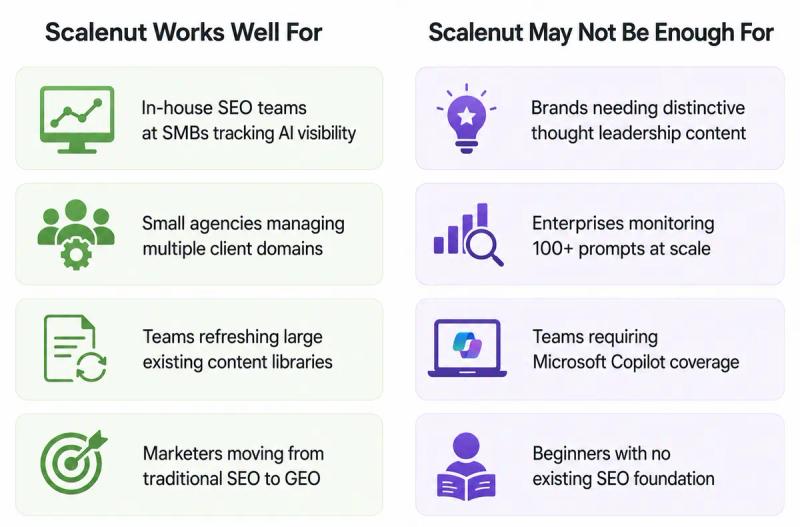
Scalenut Works Well For: The clearest signal that Scalenut is right for your team is this: you're already thinking about AI search visibility, you're managing content across one to a handful of domains, and you currently jump between three or four tools to do what Scalenut puts in one place. The consolidation value is real at that scale, and the pricing reflects it.
In-house content teams at growing companies will get the most out of the Plus and Professional tiers - particularly if refreshing an existing content library is on the roadmap, since the audit and optimiser combination handles that workflow efficiently.
Small agencies managing multiple client brands will find the unlimited workspaces on Professional genuinely useful, and the Backlinks Marketplace removes the need for a separate link procurement tool for clients who need occasional placements without a full outreach programme.
Scalenut May Not Be Enough For: Enterprise teams tracking hundreds of prompts across complex topic sets will hit the Professional plan's 100-prompt ceiling faster than expected, and the jump to custom VIP pricing is significant.
Teams whose primary need is high-quality, differentiated content - not just well-structured, topically complete articles - will find that no plan tier solves the voice problem that Cruise Mode leaves open.
And anyone whose audience skews heavily toward Microsoft 365 environments should note that Copilot tracking simply isn't available on any current plan.
Beginners without an existing SEO foundation will also struggle here. The platform doesn't explain why a GEO Score matters or what to do when your prompt coverage is low - it assumes you already know. That's not a criticism, but it is a realistic expectation to set before signing up.
Scalenut Review: Pros and Cons
Scalenut's strongest qualities cluster around visibility and audit work. The GEO Watchtower delivers measured, prompt-run data rather than modelled estimates, the Source Domains filter gives you competitive intelligence that most tools don't surface at all, and the Content Optimizer's Topic Gap Map makes page refresh decisions faster and more defensible.
The platform's breadth - visibility tracking, content creation, optimisation, link acquisition, and social listening under one login - genuinely reduces tool sprawl for teams operating at SMB scale, and annual pricing makes that breadth accessible without enterprise-level commitment.
The weaknesses are equally consistent. Cruise Mode produces derivative output by design - it mirrors what ranks, so it can't produce what doesn't exist yet. The Action Center shows you gaps more fluently than it tells you how to close them.
Prompt limits constrain the platform more than most users anticipate before they're inside it. And the Cloudflare dependency for AI traffic attribution, while technically sound, adds an integration step that teams without engineering support may find slow to resolve.
Final Verdict
5 years into working in SEO, I've seen a lot of tools promise to replace your stack and deliver a noisier version of what you already had. Scalenut in 2026 is different from that pattern - not because it's perfect, but because the problem it's solving is the right one.
So, knowing where your brand appears, or doesn't, inside AI-generated answers is the visibility question that matters most right now, and Scalenut is one of the few platforms building its entire architecture around that question rather than retrofitting an answer onto a legacy content tool.
The verdict depends entirely on what you need it for. Use it to track AI visibility, audit underperforming pages, identify content gaps your competitors are being cited for, and acquire targeted backlinks - and it earns its cost at almost every plan level.
Expect it to write publication-ready content in your brand's voice, or hand you a fully prioritised execution roadmap from the data it surfaces, and you'll find yourself filling those gaps manually regardless of which tier you're on.
Written By
Want help getting your brand ranked on Google and cited by AI?
We help businesses build AI visibility through SEO, content, and authority with clear revenue impact.
Book a Strategy Call